
Material issues are identified each year that could significantly affect the group’s ability to create and sustain value for its stakeholders.
Each year the board and management review these issues by taking into account the group’s business plans, budgets and strategy, group risks, sector and competitor dynamics, the trading environment, macroeconomic factors, capital resources and the regulatory environment.
The needs, expectations and concerns of stakeholder groups that are most likely to influence the group’s ability to create sustainable value, notably customers, suppliers, regulators, staff, shareholders and providers of financial capital, are central to determining these material issues.
RISKS AND IMPACTS are outlined for each material issue to highlight the factors that could adversely affect the group and therefore require management attention.
OPPORTUNITIES describe the actions being taken to manage these risks and the opportunities to strengthen the group’s ability to create value.
Read more about the needs, expectations and concerns of our stakeholder groups.
Material issues for the year ahead
Why material?
Competition is intensifying across health, wellness, beauty, pharmacy and pharmaceutical distribution, with competitors investing in price, convenience, digital capability, service and customer loyalty. The group’s ability to defend its market share while pursuing growth in existing and new segments is critical to revenue growth and profitability.

Risks and impacts
- Competitive pressure is evident through pricing, promotions, digital convenience, fast-delivery models, site access, franchise relationships and competing loyalty programmes.
- Failure to remain relevant to evolving customer needs could result in loss of market share, margin dilution, reduced customer loyalty and weaker growth across the retail, pharmacy and wholesale businesses.
- Private label and exclusive brands, pharmacy services and UPD’s offering are exposed to increasingly aggressive price, product and service differentiation by competitors.
- Increased competition for attractive sites, customers and healthcare professionals could constrain the group’s ability to expand its store, pharmacy and service footprint.
Mitigating actions and opportunities
- Strengthen the customer value proposition through differentiated ranges, competitive pricing, convenience, healthcare credentials and customer service.
- Leverage ClubCard insights to deepen personalised engagement and strengthen customer loyalty, while using the group’s pharmacy expertise, front shop offering and store network as key differentiators.
- Revitalise the ClubCard offer with relevant affinity partners and instant rewards.
- Continue to strengthen omni-channel, digital and delivery capabilities in response to changing customer expectations.
- Maintain a robust store and pharmacy development pipeline, with disciplined site selection and investment.
- In UPD, protect and grow client relationships through service reliability, operational efficiency and competitive commercial models focused on profitable market segments.
Why material?
Reliable, resilient and secure technology infrastructure is critical to supporting the group’s growth objectives and evolving customer and market demands, while protecting the security and confidentiality of data.

Risks and impacts
- Technology failures or disruption could affect customer experience, regulatory compliance, financial reporting, inventory management, supply chain continuity and the group’s reputation.
- Legacy platforms, infrastructure constraints or limitations in recovery capabilities could affect the group’s ability to transact, dispense, fulfil orders, service customers and operate efficient supply chains.
- Cybersecurity and data privacy risks are heightened by the volume and sensitivity of customer, patient, employee and operational data as well as the increasing scale and sophistication of cyberthreats, including those enabled by artificial intelligence (AI).
- A material cyber incident could result in data compromise, ransomware, operational disruption, remediation costs, regulatory sanctions and reputational damage.
Mitigating actions and opportunities
- A technology modernisation programme is under way, with key strategic systems in various stages of execution or planning.
- Technology enablement across the retail environment is focused on data management, analytics and systems integration to support personalised customer experience across channels.
- Cybersecurity capabilities include managed detection and response, security operations centre monitoring, vulnerability management, end-point controls and penetration testing.
- Identity and access controls, threat intelligence and targeted cyber training are being strengthened, with cyber-disruption scenarios incorporated into business continuity planning.
- AI is being investigated to strengthen threat detection, monitoring and automation, while improving operational efficiency.
Why material?
Consumer spending remains sensitive to cost-of-living pressures, interest rates, fuel prices, unemployment and consumer confidence. These factors influence customers’ purchasing behaviour, product mix and demand for discretionary products. While healthcare and pharmacy-related spending is relatively resilient, a sustained constrained trading environment could affect revenue growth, margins and the group’s ability to achieve its strategic growth objectives.

Risks and impacts
- Sustained pressure on disposable income could impact volume growth, alter product mix, increase demand for value and place pressure on margins.
- Geopolitical events, currency volatility and changes in international investor sentiment towards South Africa may increase the cost of imported products and inputs, with limited ability to recover these costs from customers.
- A constrained trading environment can intensify competition as customers increasingly compare value, convenience, price, product availability, delivery and loyalty benefits.
- Capital and working capital pressures may require trade-offs between investment in growth initiatives, inventory availability, margin protection and financial returns.
- Crime, fraud and shrinkage may increase in a constrained environment, particularly in relation to high-value or scarce healthcare and other products.
Mitigating actions and opportunities
- Protect the customer value proposition through accessible price points, targeted promotional activity, private label ranges as well as the group’s extensive and convenient store and pharmacy network.
- Use ClubCard customer insights to enable relevant, personalised engagement and targeted offers, supported by consistently high standards of customer service.
- Maintain disciplined working capital and inventory management while balancing capital allocation between growth, resilience, operational efficiency and shareholder returns.
- Continuously monitor fraud, and shrinkage and risks associated with high-value products.
- Manage foreign exchange exposure on imported products and source alternative products locally through the supplier development programme.
Why material?
Clicks Group operates in a highly regulated environment in relation to healthcare, pharmacy, retail, labour, data privacy, safety and distribution.

Risk and impacts
- Licence, healthcare and compliance failures can have regulatory consequences such as fines, loss of licences or store closures, and reputational damage, as well as increased compliance requirements and costs.
- Current exposures include pharmacy licence constraints, healthcare regulatory changes, National Health Insurance uncertainty and single exit price-related risks.
- Regulatory change could affect turnover, margin, service models, pharmacy expansion, healthcare credibility as well as the ability to launch new products.
Mitigating actions and opportunities
- Strong regulatory engagement and governance controls are maintained over pharmacy licences, healthcare compliance, privacy, safety and distribution requirements.
- Controls over licence application processes, compliance monitoring and assurance over key regulatory obligations.
- Position the group to participate credibly in healthcare access opportunities as the regulatory landscape evolves, supported by store and pharmacy growth.
Why material?
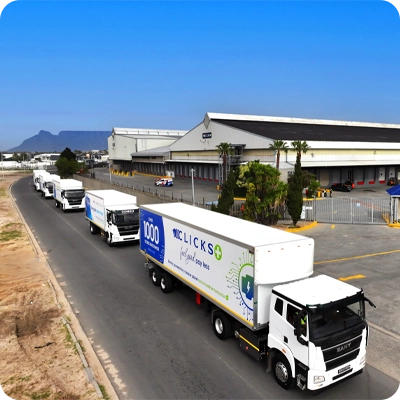
A resilient, efficient and reliable supply chain is essential to maintaining product availability, serving customers and generating revenue across the group’s retail, pharmacy, online and wholesale businesses.
Risk and impacts
- Disruptions across the supply chain, including distribution centre capacity, systems instability, inaccurate forecasting, supplier constraints and logistics disruptions may affect product availability and service levels.
- External factors, including infrastructure constraints, geopolitical events, supplier disruption, extreme weather or labour disruption, could interrupt the movement or availability of products.
- Poor product availability or fulfilment could lead to lost sales, customer dissatisfaction, customer attrition and reputational damage.
- Disruption to critical supply chain systems or infrastructure could affect the group’s ability to replenish stores, supply customers and fulfil online orders.
Mitigating actions and opportunities
- Measures to strengthen distribution centre security, resilience and operational efficiency are being implemented.
- Forecasting, inventory management and stock allocation capabilities are being enhanced to improve product availability and optimise working capital.
- Supply chain and fulfilment capabilities are being enhanced across retail, pharmacy, online and UPD to improve service reliability.
- Supplier engagement and contingency planning support the continuity and resilience of product supply.
Why material?
The group’s operations, supply chain, stores, distribution facilities and customers are exposed to the effects of climate change and other environmental pressures. Managing these risks, reducing the group’s environmental impact and responding to customer and shareholder expectations are critical to ensuring long-term sustainability.

Risks and impacts
- Extreme weather events and changing climate patterns may disrupt operations, trading and supply chains, damage physical assets and increase operating costs.
- Adverse weather conditions may interrupt trading at affected locations, while changes in weather patterns may influence the timing and mix of seasonal product sales, resulting in lost revenue.
- Sustained periods of extreme temperatures may affect the distribution and storage of key medicines.
- Failure to respond to growing customer demand for environmentally responsible products and packaging may result in lost sales and reduced customer relevance.
- Failure to meet environmental commitments, targets or reporting requirements may increase compliance costs and result in pressure from investors and other stakeholders, which could affect the group’s reputation.
Mitigating actions and opportunities
- Business continuity and response plans are regularly updated to address potential disruptions, including extreme weather events.
- Alternative energy solutions are being implemented to reduce the group’s carbon footprint and improve energy resilience, including solar installations and battery storage at the head office and distribution centres.
- Electric delivery vehicles have been deployed in UPD, while a fleet of heavy-duty electric trucks is being acquired for retail distribution.
- Packaging and waste reduction initiatives are being advanced, particularly in private label products and through the use of durable, recyclable shopping bags in stores as an alternative to single-use plastic bags.
- The group aligns its climate and environmental reporting with local and international frameworks, including the JSE Sustainability Disclosure Guidance.